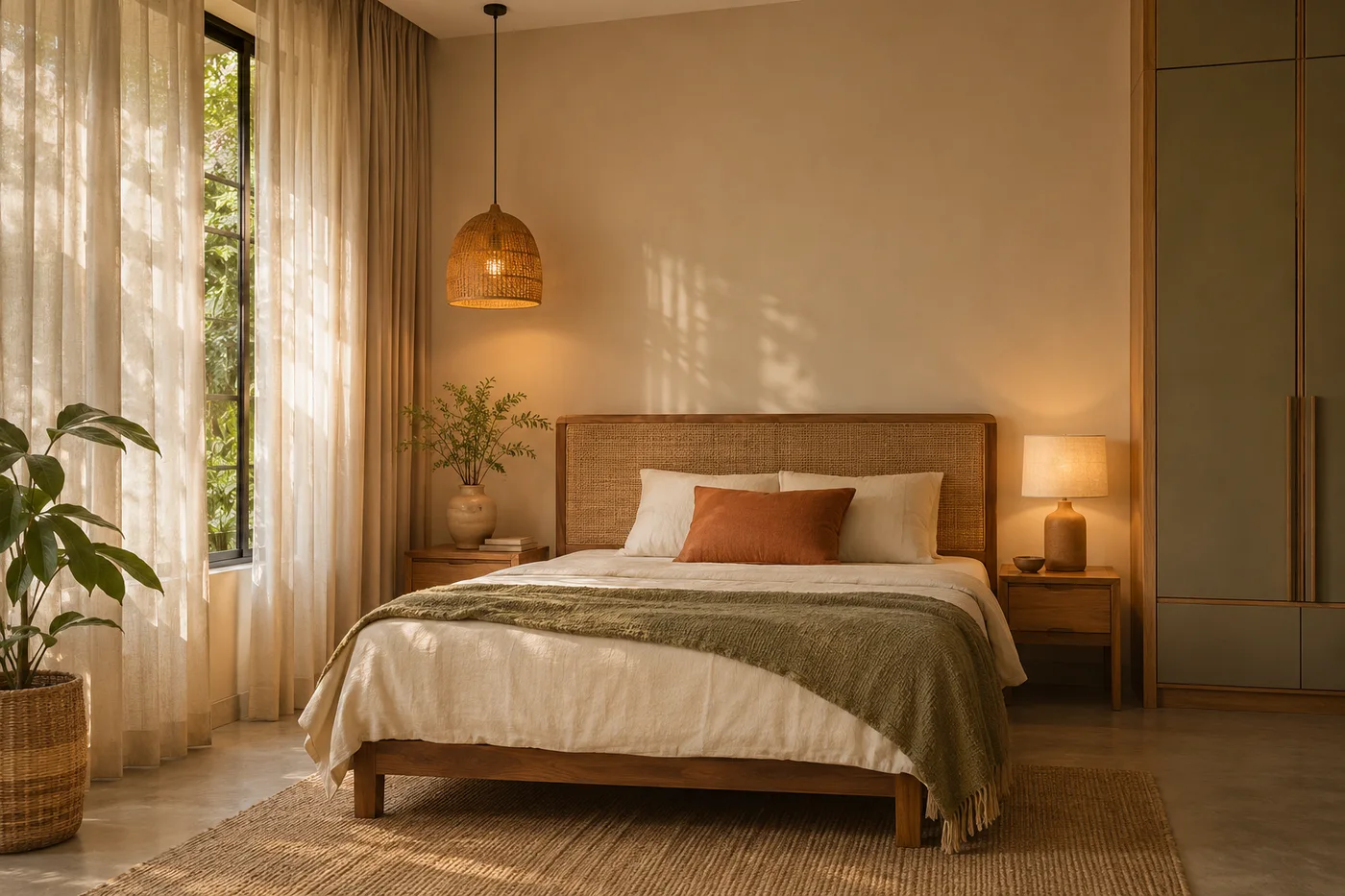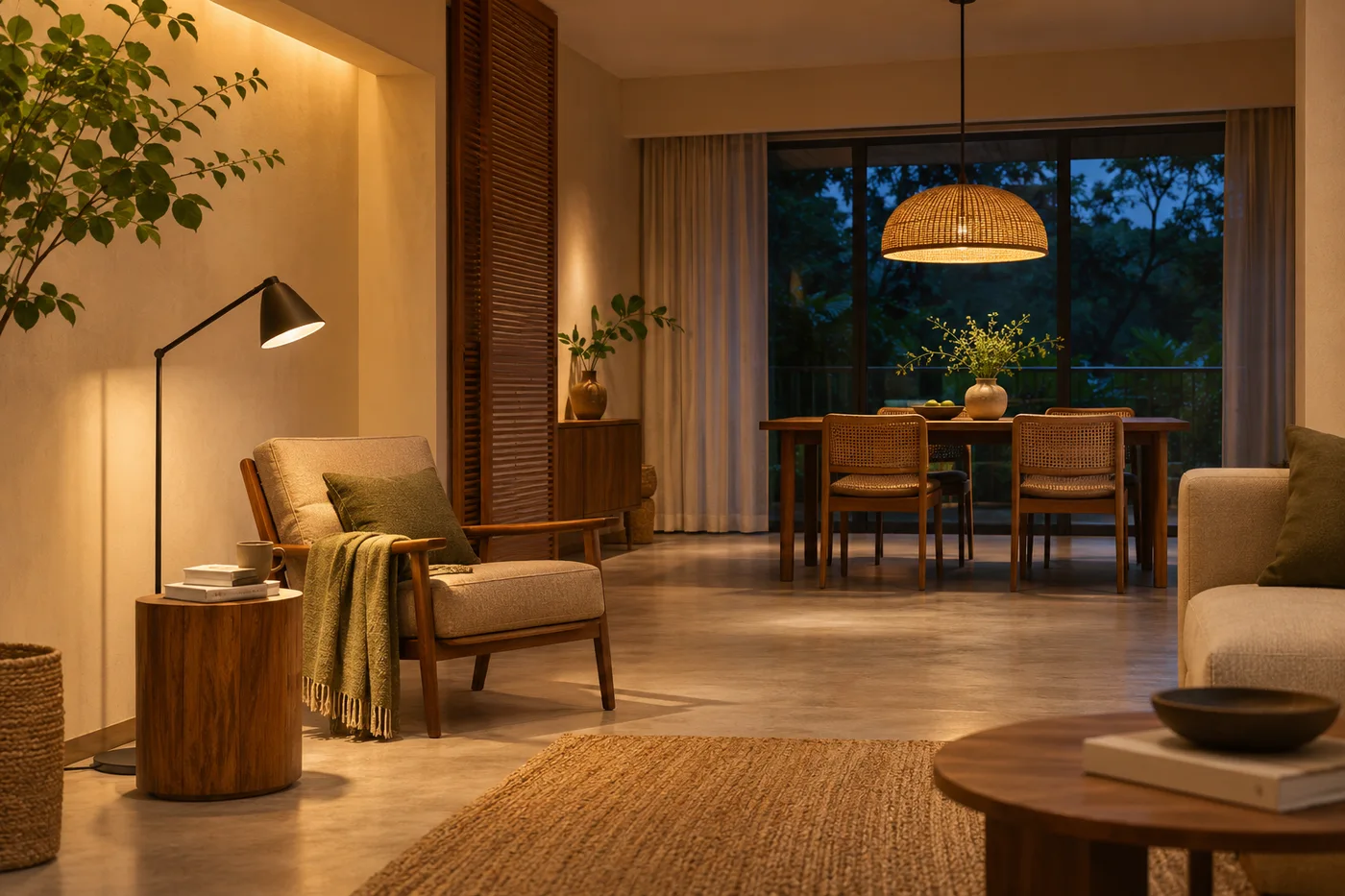
Lighting should follow the activities of a room rather than a ceiling pattern. Reading, preparing food, welcoming guests and winding down at night do not all need the same light. For a Chittagong home or a coastal apartment in Cox’s Bazar, begin by observing the daylight you already have and the tasks that need support after sunset.
Before you begin
- Plan lights around activities and actual furniture positions.
- Test proposed fittings alongside the material palette.
- Coordinate controls, compatibility and service access before installation.
Look at daylight before selecting fittings
Visit the room at different times and note where light reaches, where glare appears and which areas remain dark. Photograph the room from the places where you sit or work. Include neighbouring buildings, curtains and balcony shade in the discussion; they are part of the conditions the lighting plan must address.
A bright window does not guarantee useful light at a desk across the room. Equally, adding more artificial light is not always the first response to an uncomfortable room. Furniture position, window treatment and the placement of reflective surfaces may need review. Test these decisions in the space rather than judging them only from a rendered image.
Make an activity list for each room
In the living room, list conversation, reading, television and any work or study. For a bedroom, think about dressing, bedside reading and getting up at night. In a kitchen, identify the surfaces where food is prepared and dishes are washed. The list helps separate general illumination from task-specific needs.
Ask the designer to show where each activity receives light and how it is controlled. A room may need several lighting situations, but that does not mean it needs an excessive number of fittings. The aim is a small set of useful choices that occupants can understand without learning an elaborate control sequence.
Test positions from the user's viewpoint
Sit in the reading chair and stand at the kitchen counter when reviewing fitting positions. Check whether a visible lamp or reflected fitting is uncomfortable from those viewpoints. Review screens, mirrors and glossy surfaces together with the lighting rather than treating them as unrelated decorative items.
For bedside fittings, use the proposed bed and headboard dimensions. For dining lights, use the actual table position. A pendant aligned with the centre of the ceiling may be poorly placed over a table elsewhere in the room. Confirm these relationships before the electrical layout is finalised, and have a qualified electrician assess the installation.
Compare samples rather than colour labels alone
Lighting descriptions and product photographs can be difficult to compare. Ask to see a sample fitting or a demonstration where possible. Put it near the proposed wall colour, timber and fabric. Decide whether the effect suits the room's purpose and the preferences of the people using it.
If dimming is proposed, confirm that the fitting, driver and control are compatible according to the manufacturers and installer. Ask what happens at lower settings and whether replacements are available. Do not assume a fitting will behave as intended simply because a product listing uses the word dimmable. Record the agreed model and control arrangement.
Make controls easy to use
Think through entering and leaving the room. Identify which switch should be found first and which lights should operate independently. A reading lamp need not always be linked to every ceiling fitting. In shared bedrooms, discuss whether one occupant should be able to use a light without changing the whole room.
Keep controls consistent where possible and explain the system at handover. Ask how maintenance is carried out, including access to concealed drivers and recessed fittings. An elegant detail that cannot be serviced conveniently deserves another look before construction. The service strategy is part of the design, not a task to leave until a light stops working.
Review the room after dark
Before final sign-off, inspect the installed lighting in the evening with the intended furniture in place. Try the agreed activities and controls. Record any adjustments with the responsible installer, then keep product details with the home's care information.
For an interior design brief in Chittagong, share daylight photographs and describe how you use each room after sunset. Modish Makers can discuss a coordinated approach to layout, materials and lighting. Treat general design advice as a starting point; electrical design and installation require the appropriate qualified professionals.