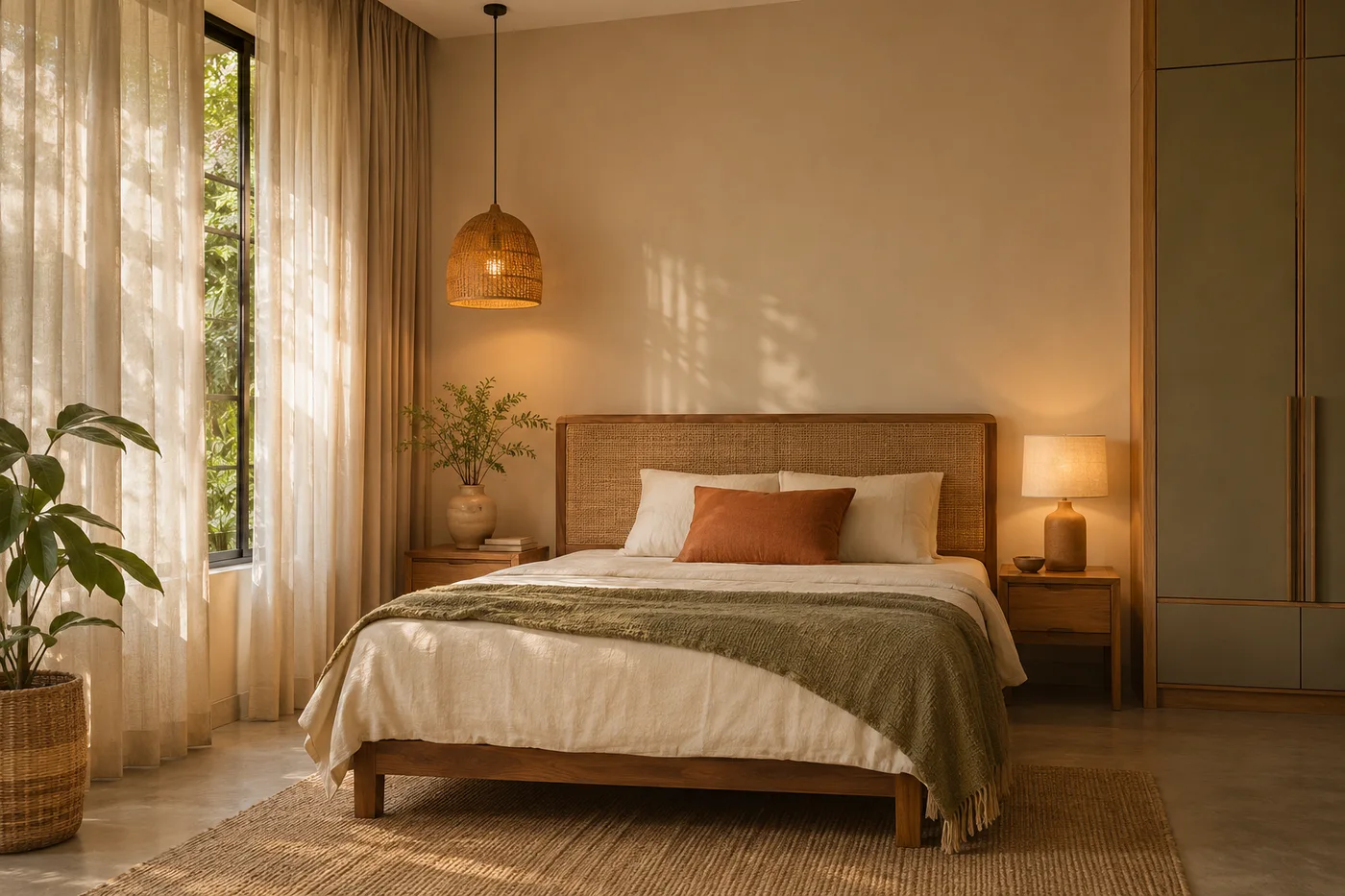
A calm bedroom comes from decisions that work together: the bed position, access to clothing, privacy, lighting and the small routines at the beginning and end of the day. Decorative finishes can support that arrangement, but they cannot compensate for a wardrobe that is awkward to open or a bedside table that blocks the door. Begin with the room's working layout.
Before you begin
- Check the full bed frame and wardrobe openings on the layout.
- Give work, dressing and storage clear limits within the room.
- Review lighting and textiles from the position where you use them.
Position the bed using the whole room
Mark windows, doors, columns and fixed services before deciding where the headboard belongs. Draw the bed at its full size, including the frame rather than only the mattress. Check how people move on either side and what happens when the bedroom door is fully open.
Consider the view from the pillow as well as the entrance. A striking feature wall may look effective from the doorway but contribute little to the experience of using the room. Think about privacy when curtains are open, and tell the designer if one person regularly gets up while the other is sleeping. Those details affect the arrangement more than a particular headboard style.
Design the wardrobe around its contents
Make a simple inventory of hanging clothes, folded items, bedding, bags and accessories. Decide which items need everyday access. A wardrobe full of long hanging sections may be poorly suited to a household that mainly needs shelves and short hanging space. Ask to see the inside of the proposal before approving the outside.
Compare hinged and sliding options using the actual layout. Hinged doors need room to swing; sliding doors limit which section is open at one time. Neither is automatically the best choice for every small room. Check access near corners, curtain stacks and bedside furniture, and ask how hardware can be maintained or replaced.
Decide what the room should not contain
If a desk belongs in the bedroom, give it a clear place and somewhere to put work away. Avoid turning every free wall into a new activity zone. A full-size desk, a dressing table and an extra console may each seem modest alone while leaving very little usable floor space together.
Keep objects that support real routines. One person may need a comfortable chair for dressing; another may prefer more space beside the bed. Tell the designer what you do, rather than trying to reproduce a room that was photographed for a different household. A convincing bedroom plan can explain the purpose of each substantial piece of furniture.
Plan more than one lighting situation
Review how you dress in the morning, read in bed and move through the room at night. These activities may need different fittings and controls. A single bright ceiling light is a limited answer to all of them. Ask to test proposed lights from the position where they will be used.
Place switches where they make sense to the occupants and coordinate them with the bed and wardrobe positions. Ask a qualified electrician to assess the installation. Decorative pendants near a bedside need suitable positioning and a practical replacement strategy; they should not interfere with daily movement simply to complete a symmetrical photograph.
Use textiles and finishes with a care routine in mind
Bring wall colour, wood finish and fabric samples together. Look at them in the room's daylight and under the intended artificial light. A warm neutral scheme can still contain contrast through grain, weave and a limited accent colour. There is no need to make every surface the same shade to create a considered room.
Ask about cleaning, replacement and how the curtains operate around the window. A large curtain stack can cover glazing or interfere with a wardrobe if it is planned late. Choose bedding and upholstery that suit how you live and how often you can care for them. The maintenance discussion belongs before the purchase.
Finish with a room-specific brief
Before meeting an interior designer in Chittagong, prepare the room dimensions, bed size, clothing inventory and photographs of existing furniture. Note what currently frustrates you: a bright bedside light, insufficient hanging space, lack of privacy or an awkward route past the bed.
Modish Makers can discuss these priorities alongside the rest of your home. Ask for the layout and key details to be resolved before a decorative package is approved. The result should be a bedroom whose arrangement remains useful after the accessories have been put away and ordinary life has resumed.