A coastal home should be comfortable to use and realistic to maintain. In Cox’s Bazar, an attractive material palette is only part of that decision. The discussion also needs to cover the position of the property, its exposure, how frequently it is occupied and who looks after it between visits. Start with those conditions before choosing finishes from a photograph.
Before you begin
- Map exposure and existing moisture problems before choosing finishes.
- Specify cabinet assemblies and fittings, not just visible surface colours.
- Match furnishing and maintenance choices to how often the home is occupied.
Describe the property’s actual exposure
Two homes in the same town can present different design questions. One may open directly toward the coast, while another has sheltered windows and neighbouring buildings. Record where wind-driven rain has entered, where condensation appears and which fittings have needed repeated attention. Existing problems are useful information for the designer and relevant specialists.
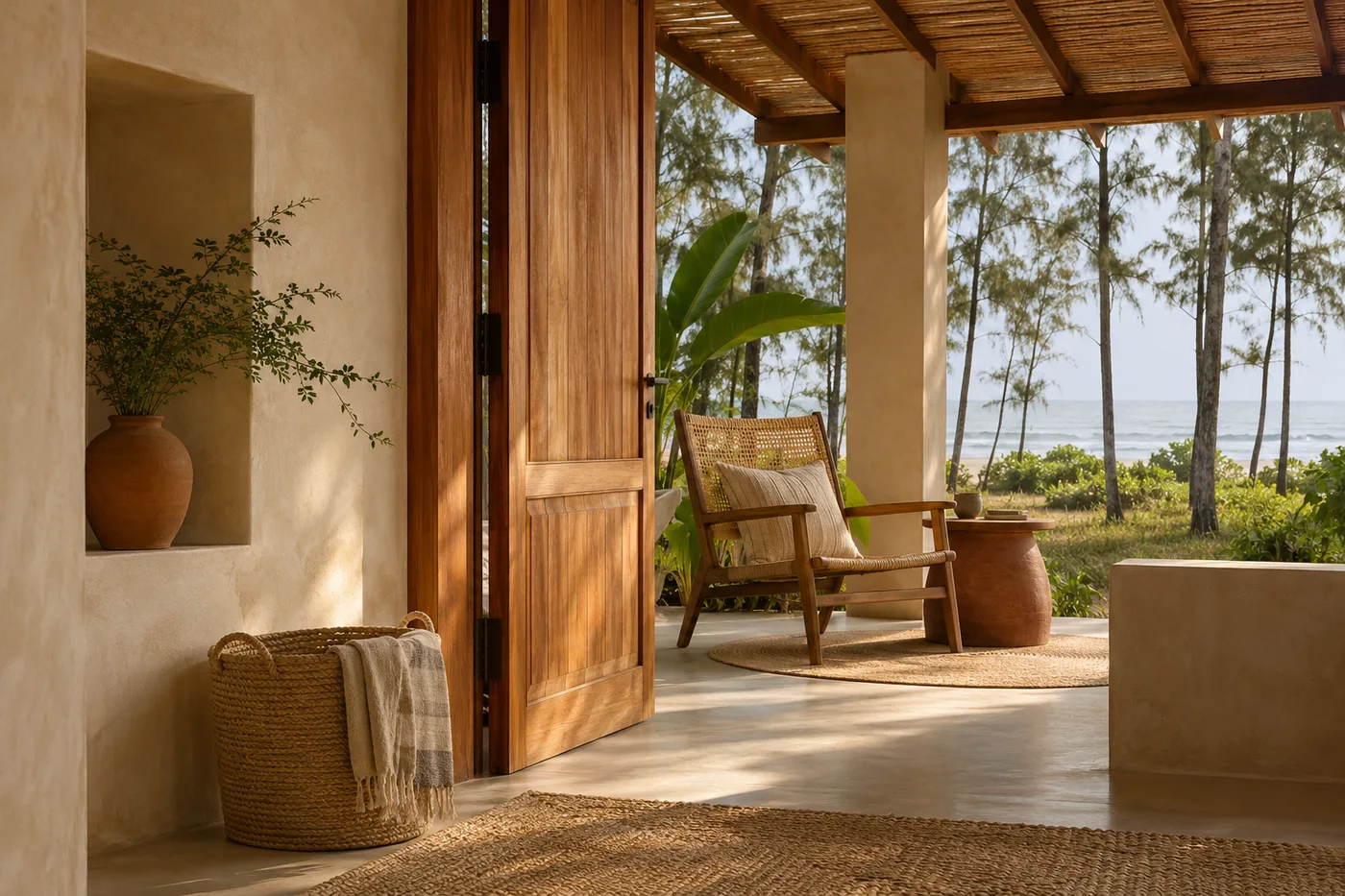
Separate interior areas from exposed thresholds. A sheltered bedroom, an entrance beside an open veranda and a bathroom do not need identical finishes. Ask suppliers to confirm whether each proposed product is intended for its particular location. A showroom display does not establish how a product will behave in your property.
Address moisture before concealing a wall
New paint, panelling or cabinetry should not be used to hide an unresolved moisture problem. EPA guidance identifies moisture control as central to preventing indoor mould. Where dampness or visible growth keeps returning, investigate the water source before approving a decorative cover-up.
Discuss persistent leaks, condensation and ventilation problems with qualified building professionals. The right response depends on the cause. A material described as moisture-resistant is not a repair for a leaking wall. Keep the technical assessment separate from the choice of decorative finish so that an attractive sample does not become a substitute for solving the underlying issue.
Choose timber and cabinetry as complete assemblies
The visible surface is only one part of a cabinet. Ask about the substrate, edges, joints, backing, installation method and hardware. Request a written description of the proposed construction rather than a broad label such as premium board or waterproof finish. Ask how service openings and pipe penetrations will be detailed.
For timber or veneer, review a sample of the actual finish alongside the materials around it. Decide whether a change in appearance with use is acceptable to you. Ask the supplier about maintenance, repair and replacement. Treat material selection as a conversation about the complete assembly and its intended exposure, not a contest between generic material names.
Pay attention to fittings you touch every day
Drawer runners, hinges, handles and door tracks may receive more daily use than a decorative wall. Ask suppliers which products they recommend for the site conditions, what care they require and whether replacements are available. Request the manufacturer's relevant suitability and warranty information instead of assuming every metal fitting has the same performance.
Avoid building inaccessible details around items likely to need servicing. A neatly finished panel that prevents access to a valve or connection can make a later repair unnecessarily disruptive. Plan maintenance access with the responsible trades and record the locations before work is closed up.
Let the furnishings match the occupancy pattern
A full-time family home and a coastal apartment used for occasional stays need different routines. Explain whether the property will be closed for long periods, who will check it and what cleaning is practical. Discuss removable covers, washable textiles and furniture that can be moved for cleaning. Ask for care instructions before ordering.
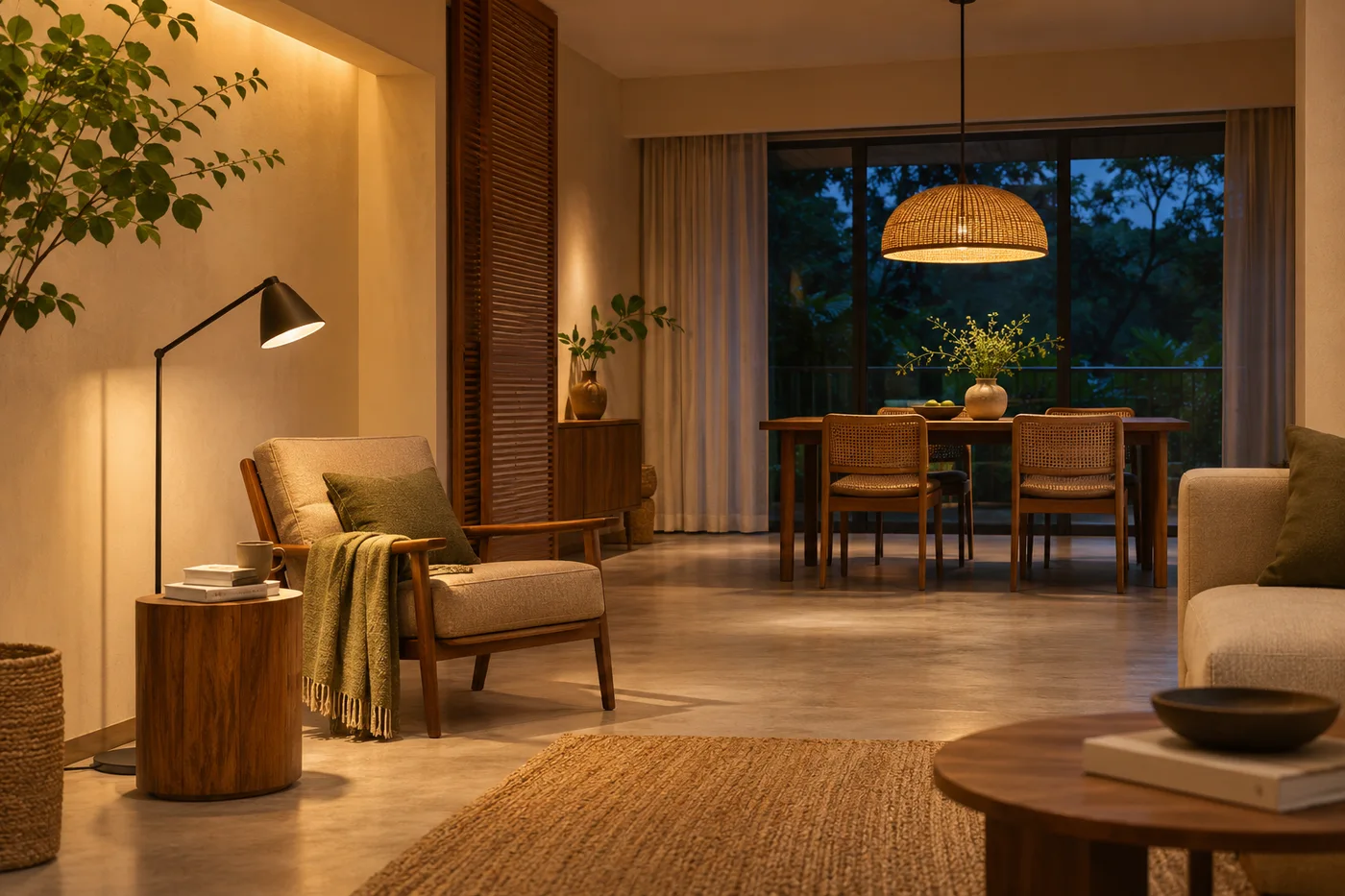
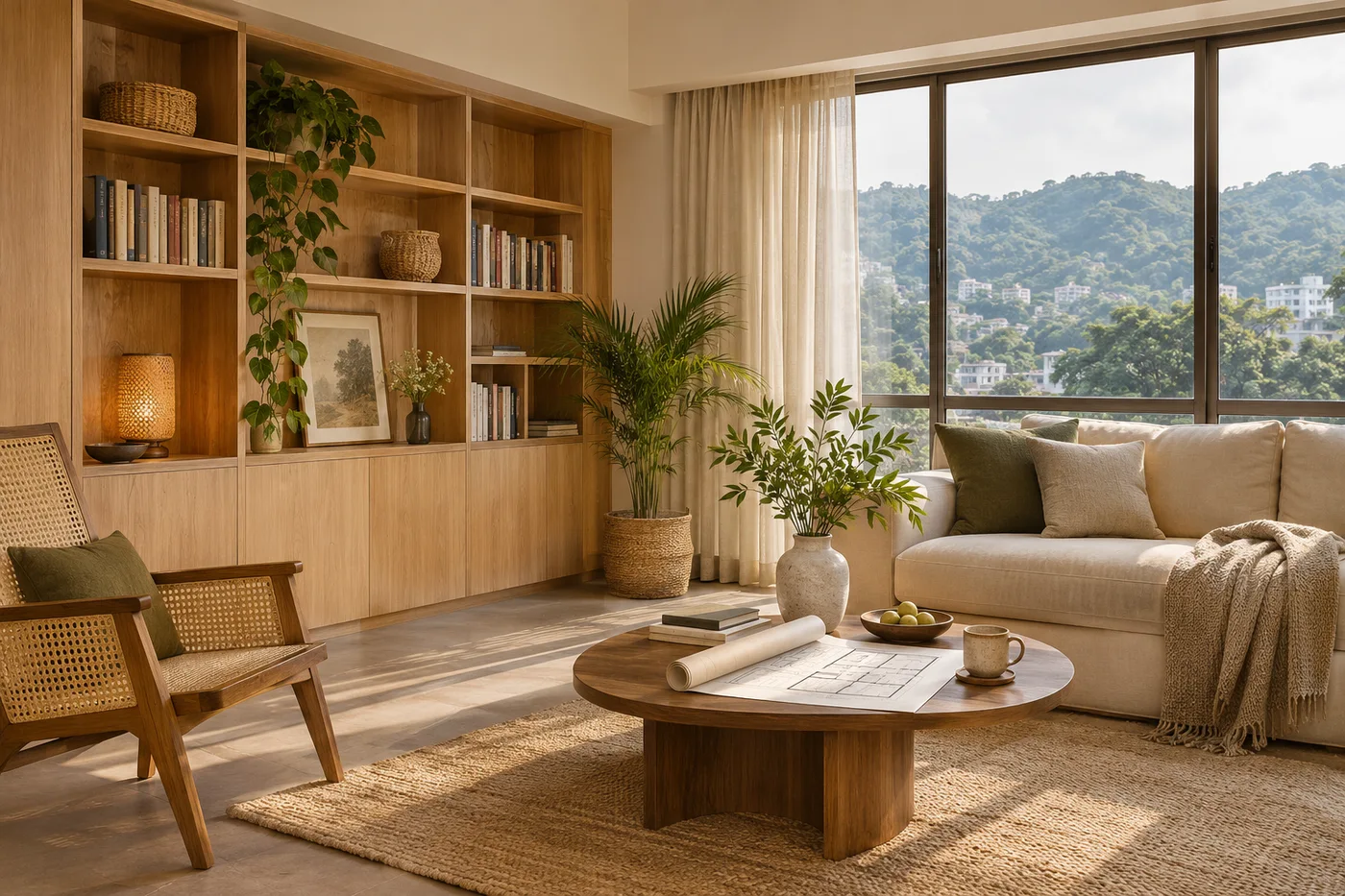
Choose a restrained set of materials that can be maintained together. Teak tones, cane, light plaster and natural fabrics can form a visual direction, but their suitability still depends on specification and placement. Do not select a delicate surface for a heavily used area simply because it completes the colour palette.
Approve a sample set and a care plan
Put the proposed flooring, cabinet finish, wall colour and fabric together in the property. Look at them in morning light and under the planned evening lighting. Note product names, finishes and any agreed substitutions in the material schedule. Photographs alone can misrepresent colour and texture.
Before sign-off, ask who cleans each surface, with which approved products and how replacement parts can be obtained. A coastal interior becomes easier to manage when these decisions are made before installation. For a Cox’s Bazar brief, share your site photographs and occupancy pattern with Modish Makers so the team can discuss scope and site requirements.